
When talking about sailing catamaran performances, the focus is on her velocity and stability. It’s these two elements, compared with those of other sailboats available on the market, that determine how the catamaran stands up against competing multihulls. So, comparing is what we did!
The graph on this page compares the velocity and stability of different sailing catamarans in the same range, currently available on the market.
Please note: The Rapido 50 and Rapido 60 models are trimaran sailboats. They are included here for comparison purposes. The Mumby 48, on the other hand, is an aluminum boat that is relatively lighter than the ORC57 catamaran.
High-performance multihulls are light and have a large sail area. These parameters are reflected in the Upwind Sail Area to Boat Weight quotient (Upwind Sail Area / Boat Weight). This formula enables us to compare the performance of different designs and different boat sizes.
On the vertical axis of the graph, the best-performing catamarans are located at the top.
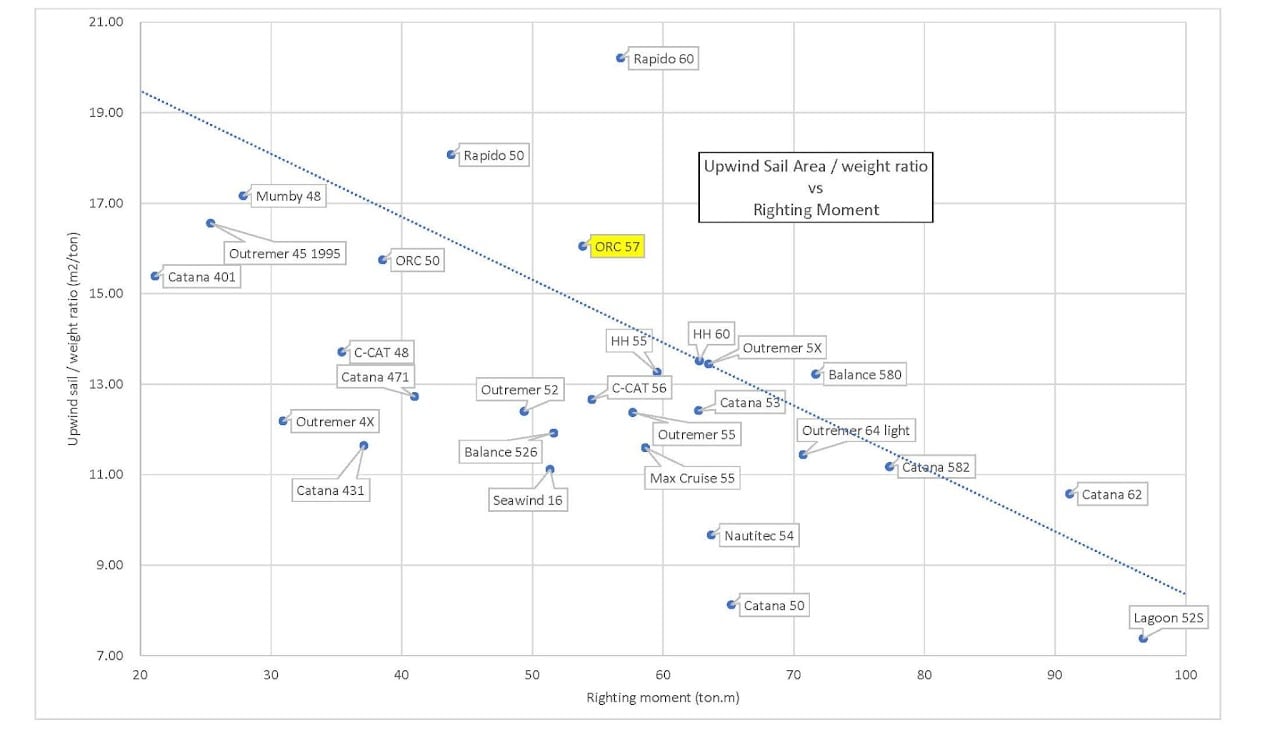
The stability of sailing catamarans depends on the boat’s weight and beam. Generally speaking, the wider and heavier the boat, the more stable it is. This is expressed in the righting moment – simplified, for the sake of comparison, by the product Boat weight by Boat half-width (Boat weight x Boat half-width).
On the horizontal axis of the graph, the most stable catamarans are on the right.
Following this study of the performance and stability of catamarans in the same range offered on the market, we were able to draw a few conclusions:
Compared to all the multihulls on this chart, the ORC57 is clearly the best-performing catamaran. It is a very light and wide catamaran, making her fast and stable. Thanks to the boat’s beam, Avel Vaez’s level of stability is comparable to other boats of the same size, which are heavier and therefore less efficient!
If there is wind, Avel Vaez will sail nicely. And sometimes faster than the wind speed! It is very pleasant to overtake a motorboat sailing at 20 knots, with only the wind flowing in our sails.
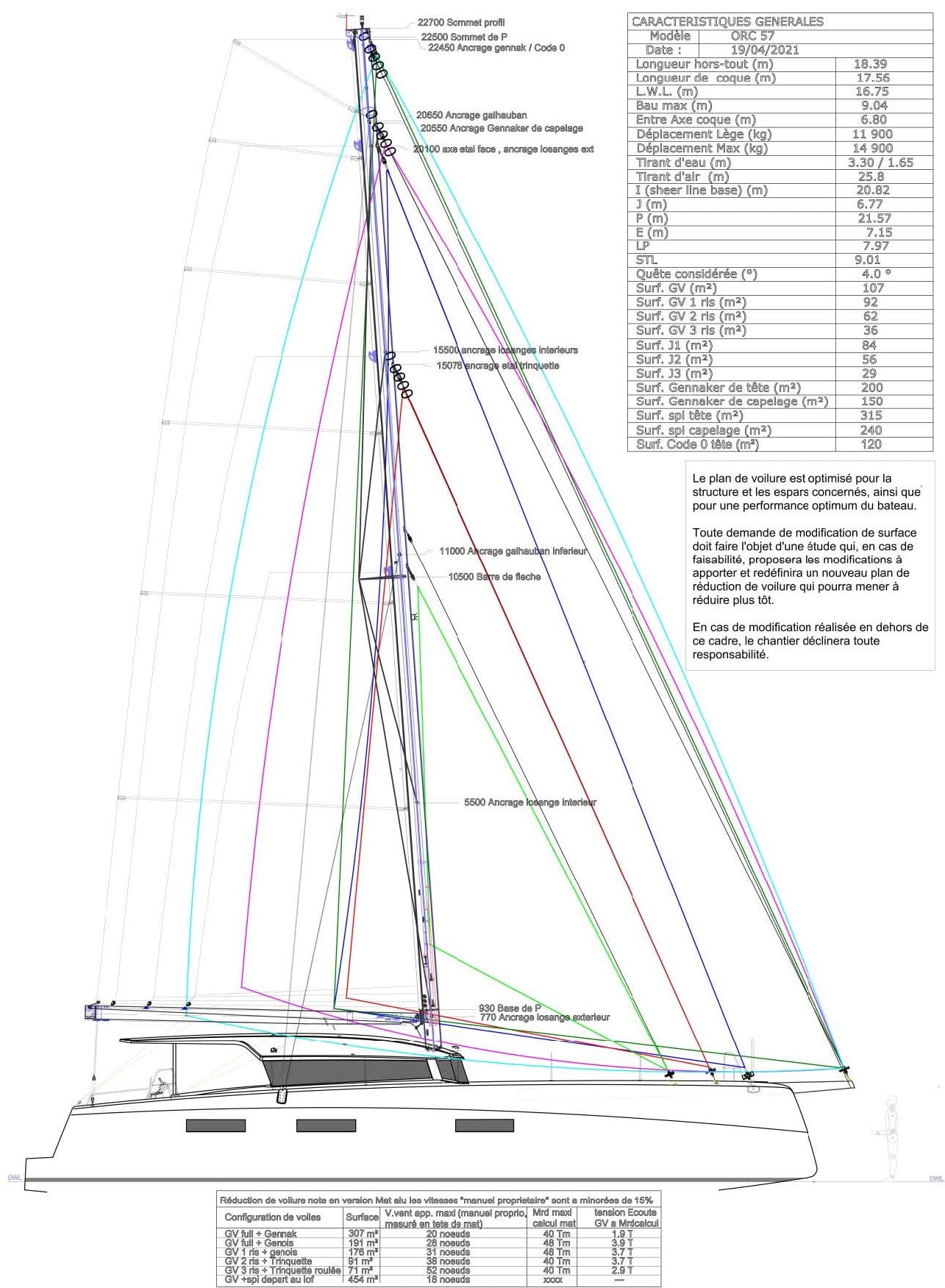
Right from the start of the ORC57’s construction, we wanted to equip Avel Vaez with the very best. Our superb catamaran is equipped with a set of 6 top-quality sails, enabling her to sail in all weathers:
To manufacture the sails for our high-performance catamaran, we have entrusted Incidence Sails, a French sailmaker that is a benchmark in ocean racing and a regular choice of leading shipyards.
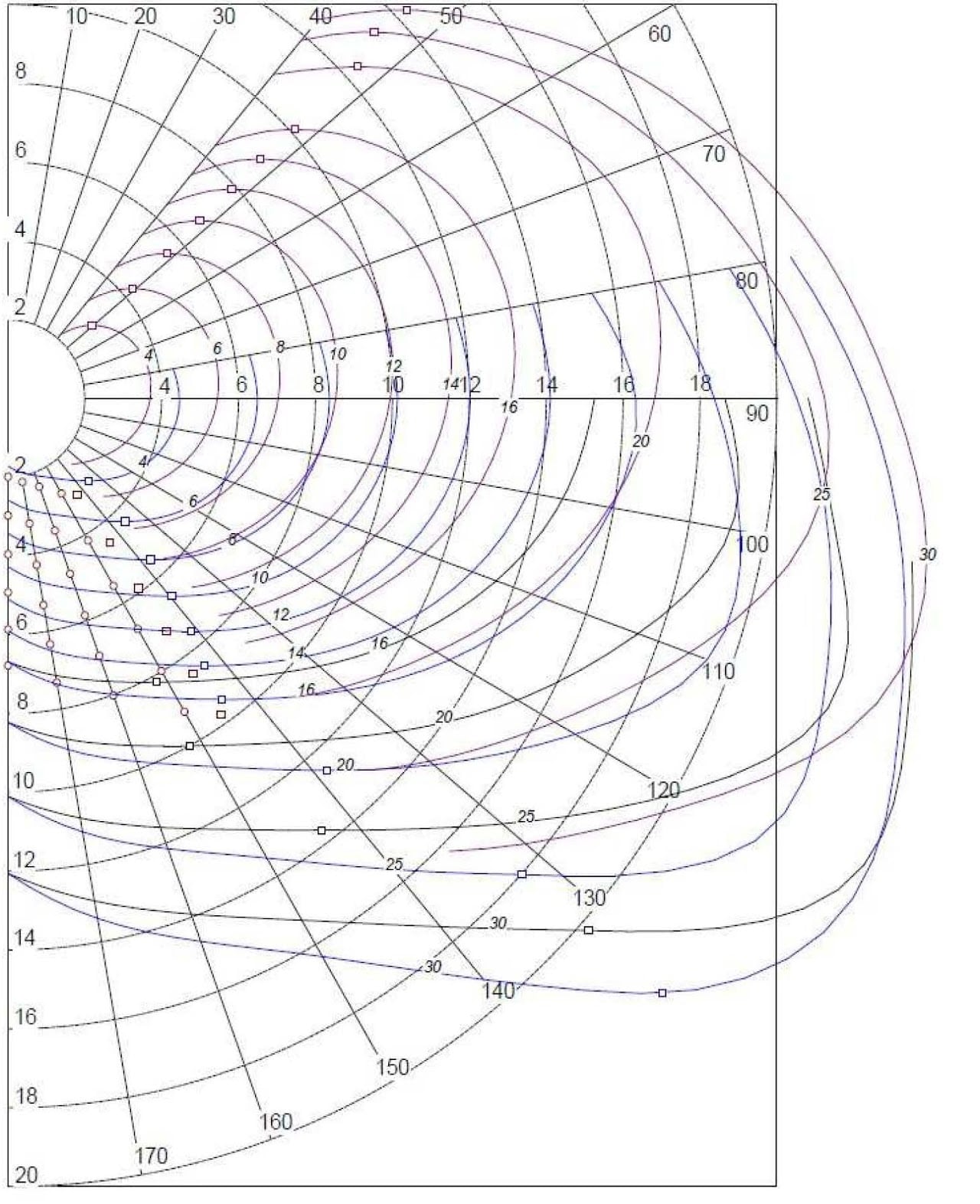
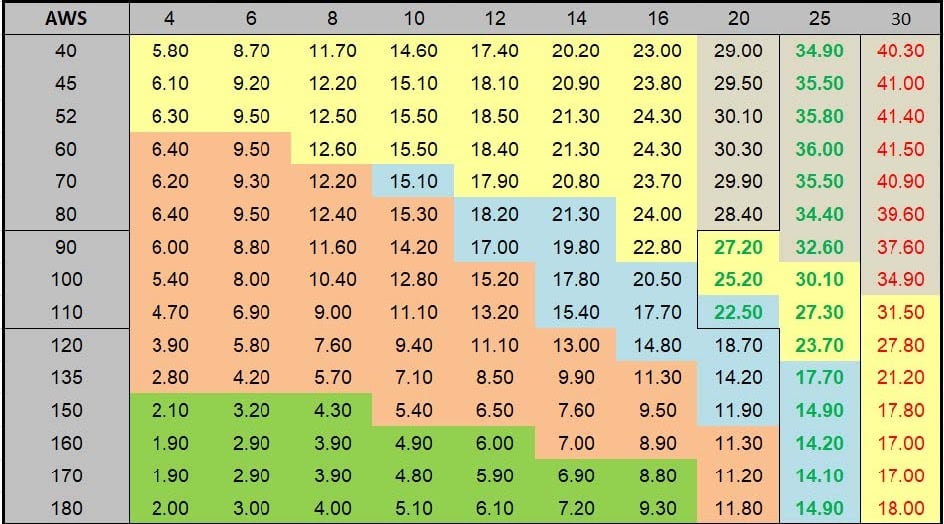
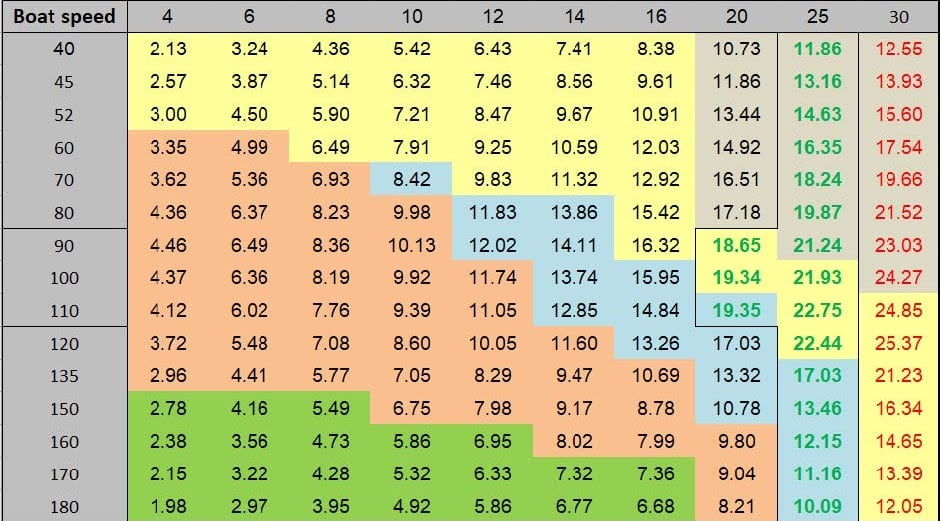
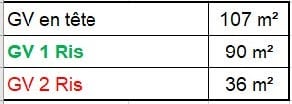
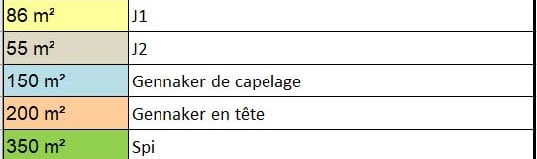
The ORC57 velocity prediction program shows catamaran speeds as a function of wind angle and sails.